Mar 3, 2026
How Property Portals are rewriting themselves for the AI era
Many investors mirror the disruption potential of AI to online classifieds with the way online classifieds disrupted print classifieds 20 years ago.
The difference this time is that many classifieds businesses are not standing still.
Our research into property portals across Europe, USA, and Asia, shows many - including the largest incumbents - have engaged in an unprecedented spate of product and platform innovation in an attempt to minimize the differentiation that the first wave of LLMs and AI native platforms are providing.
This includes rebuilding their buyer and seller experiences, embedding AI into search, valuation, listing creation, lead prioritization, and fraud detection.
We have surveyed these innovations across 4 themes:
Property Portals Go Native in ChatGPT: How portals are embedding themselves inside AI interfaces before traffic migrates away
Buyer-Side Enhancements: Rebuilding the Discovery and Decision Experience: Natural language search, conversational support, predictive recommendations, AVMs, neighbourhood intelligence, and virtual tours
Seller-Side Enhancements: AI Tools for Listing, Valuation, and Agent Workflows: Automated listing generation, lead scoring, fraud detection, AI-assisted seller journeys, and seller-facing AVMs
The Bigger Picture: Why All of This Is Happening Now: The three forces driving the transformation: service level enhancement, disintermediation risk, and changing consumer expectations.
The New Distribution Frontier: Property Portals Go Native in ChatGPT
When OpenAI opened ChatGPT to third-party plugins and, later, to custom GPT actions, a handful of property portals chose to build a presence inside the interface where a growing share of intent is being expressed.
REA Group's realestate.com.au became one of the first major portals to build a native integration directly inside ChatGPT. A buyer can now type "show me 3 bedroom houses in Richmond, Victoria under $2 million with a garage", and receive a curated, map-based results panel with individual property cards, pricing, and a direct link to view the full listing on realestate.com.au, rendered inside the ChatGPT interface.
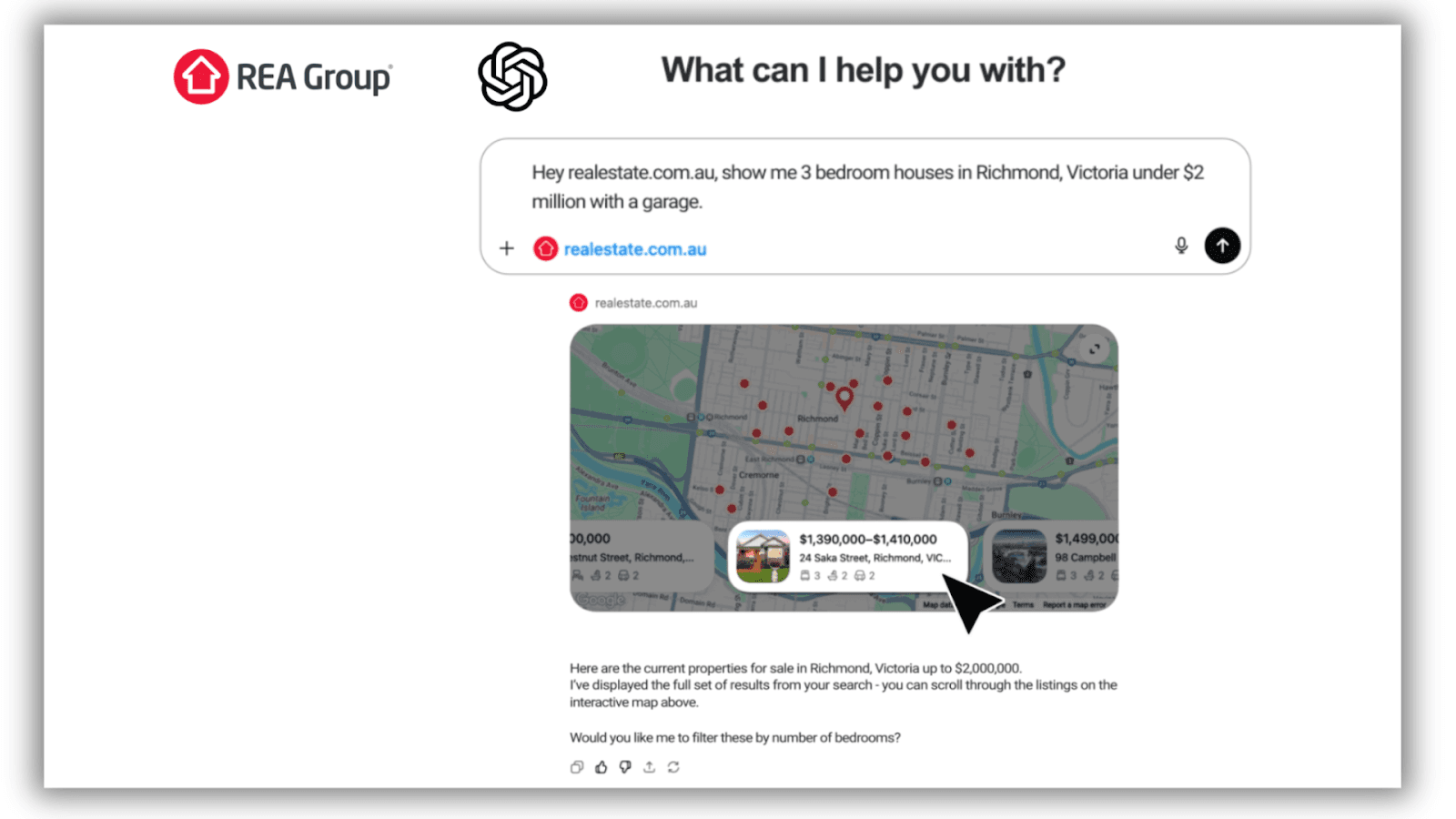
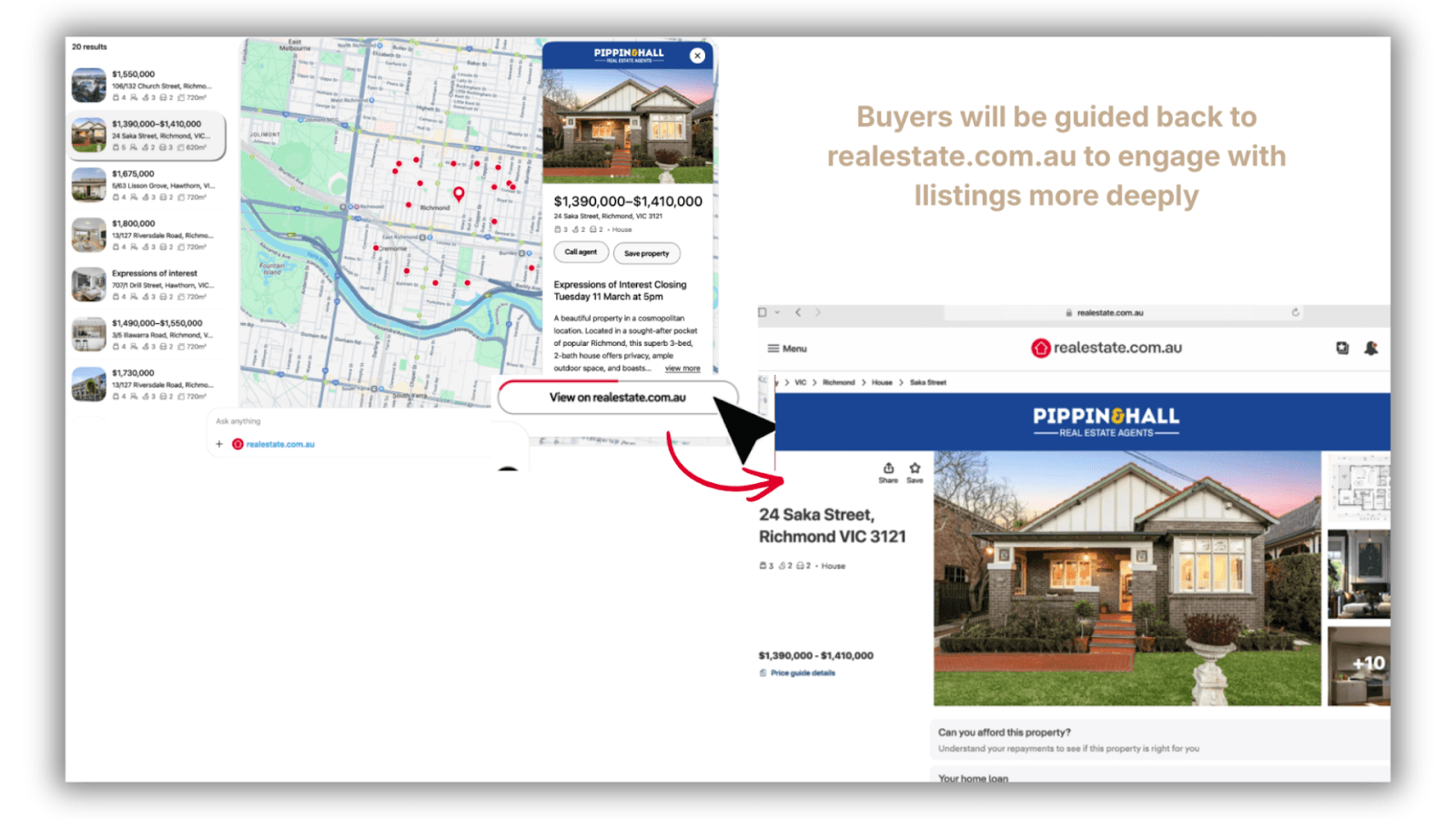
Here, ChatGPT handles the intent interpretation; realestate.com.au handles the inventory and the deep engagement. Buyers are guided back to the portal for the full listing experience. This preserves data ownership, conversion pathways, and the agent-contact moment, while meeting the buyer at the top of the ChatGPT funnel where increasing numbers are actually starting their search.
Leboncoin (France) and ImmoScout24 (Germany) have both followed suit, allowing users to query their inventory through ChatGPT-style prompts and receive structured results within ChatGPT.
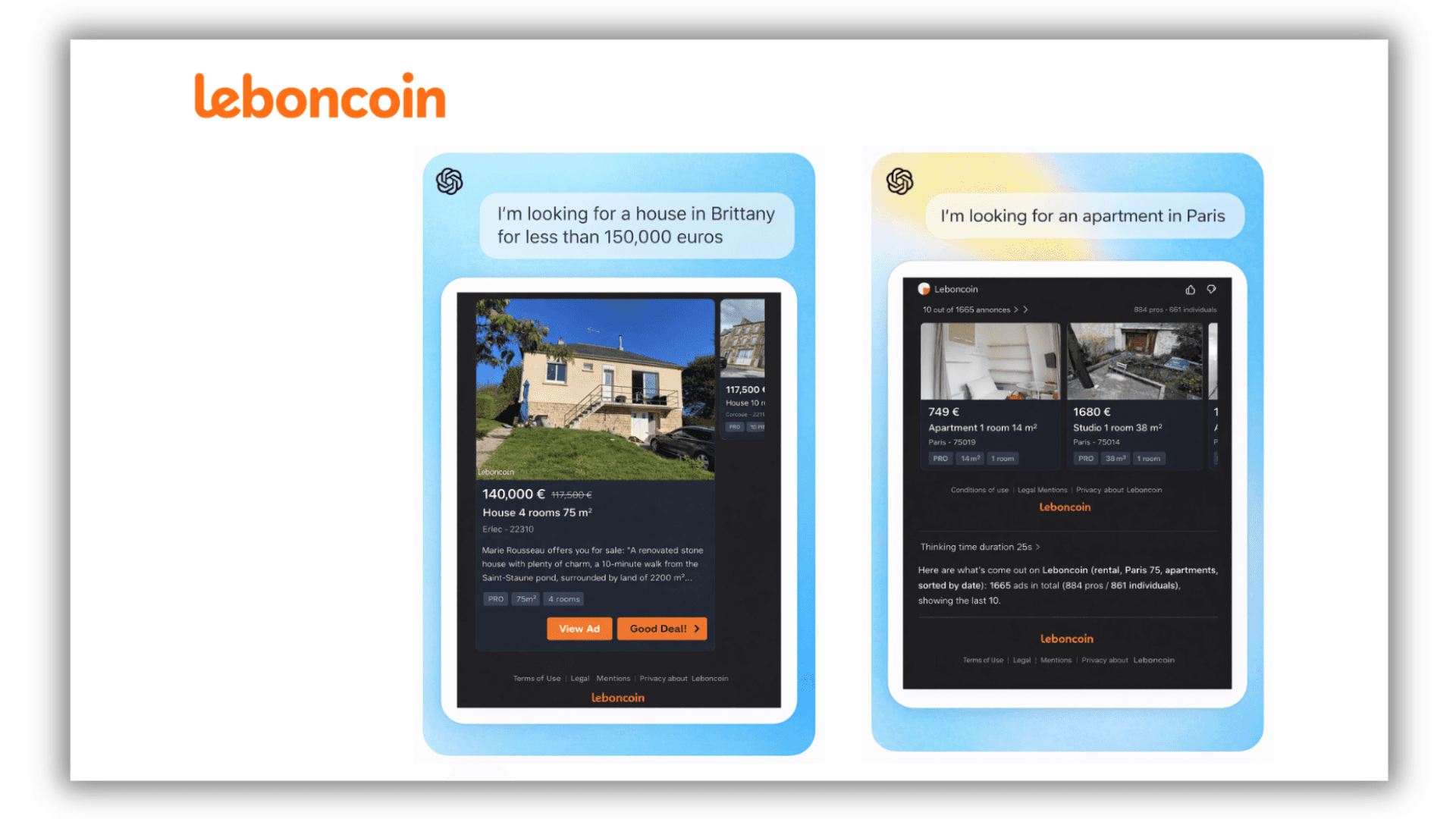
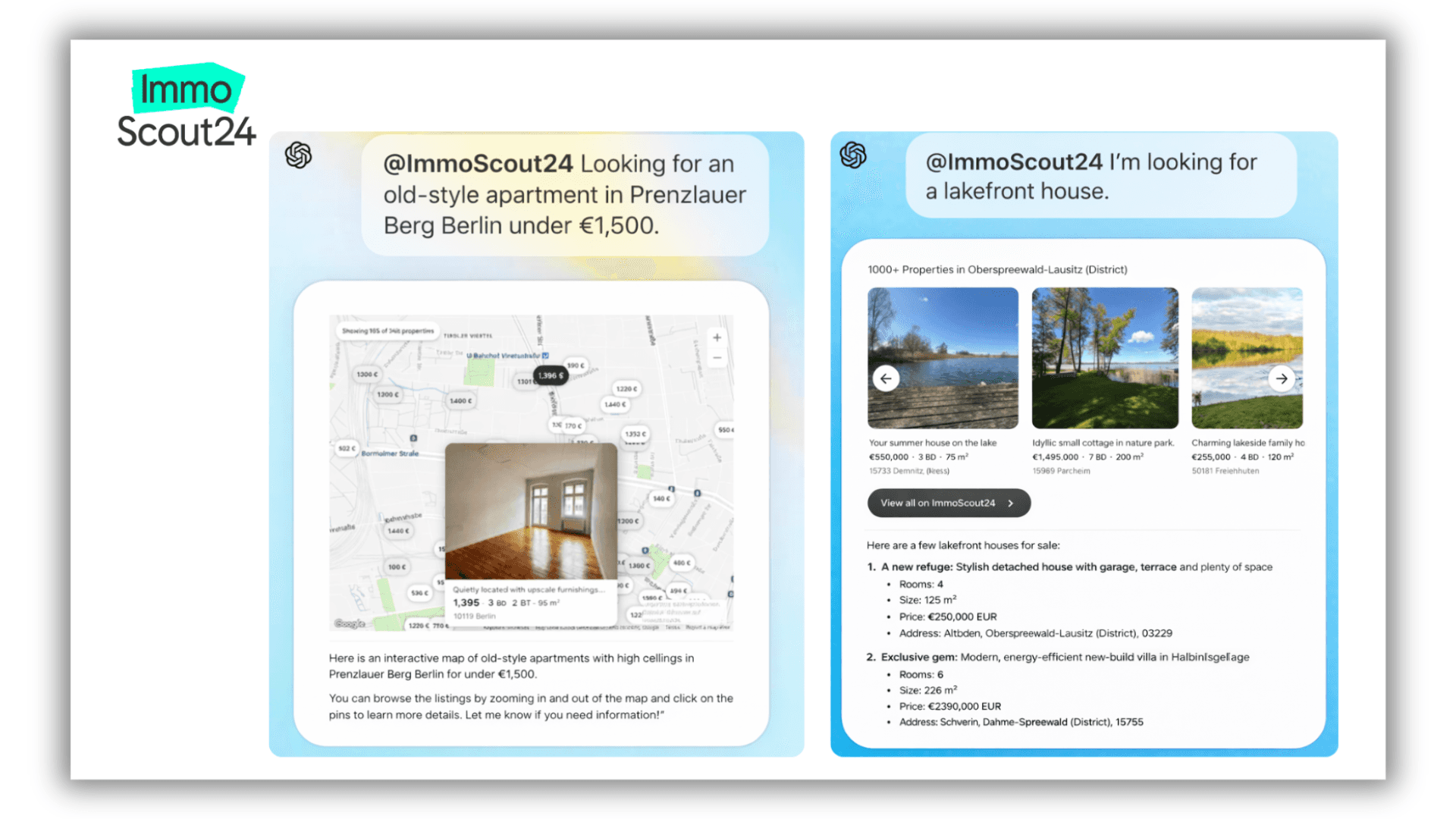
Consumer intent is migrating toward LLM-native interfaces faster than most portals can build a competing conversational experience from scratch. The portals that build a presence inside ChatGPT now are betting that being the data layer inside an AI interface is more defensible than simply rebuilding their own AI front-end in isolation. Portals are viewing this as a new acquisition channel: if consumers increasingly start their property searches with an AI assistant rather than a search box, portals will inevitably need to be accessible via those interfaces.
If search intent migrates to AI interfaces, portals want to be there too.
Buyer-Side Enhancements: Rebuilding the Discovery and Decision Experience
Natural Language Search
Zillow was the first major residential property portal in the world to launch AI-powered natural language search, rolling it out on iOS in January 2023. The initial product allowed buyers to describe their ideal home in conversational terms: "Seattle homes with hardwood floors," "Austin homes with a mountain view," "homes at least 750 sqft under $600k"; and receive matched results without touching a single filter. In September 2024, Zillow significantly upgraded the product. Buyers could now search by commute time ("homes 30 minutes from Millennium Park"), affordability relative to income, school encatchment, and proximity to specific points of interest. The underlying engine uses natural language processing to parse millions of listing attributes and match them to user-expressed criteria, with models that continuously improve as usage scales. Searches can be saved, with push notifications when new qualifying listings come online.
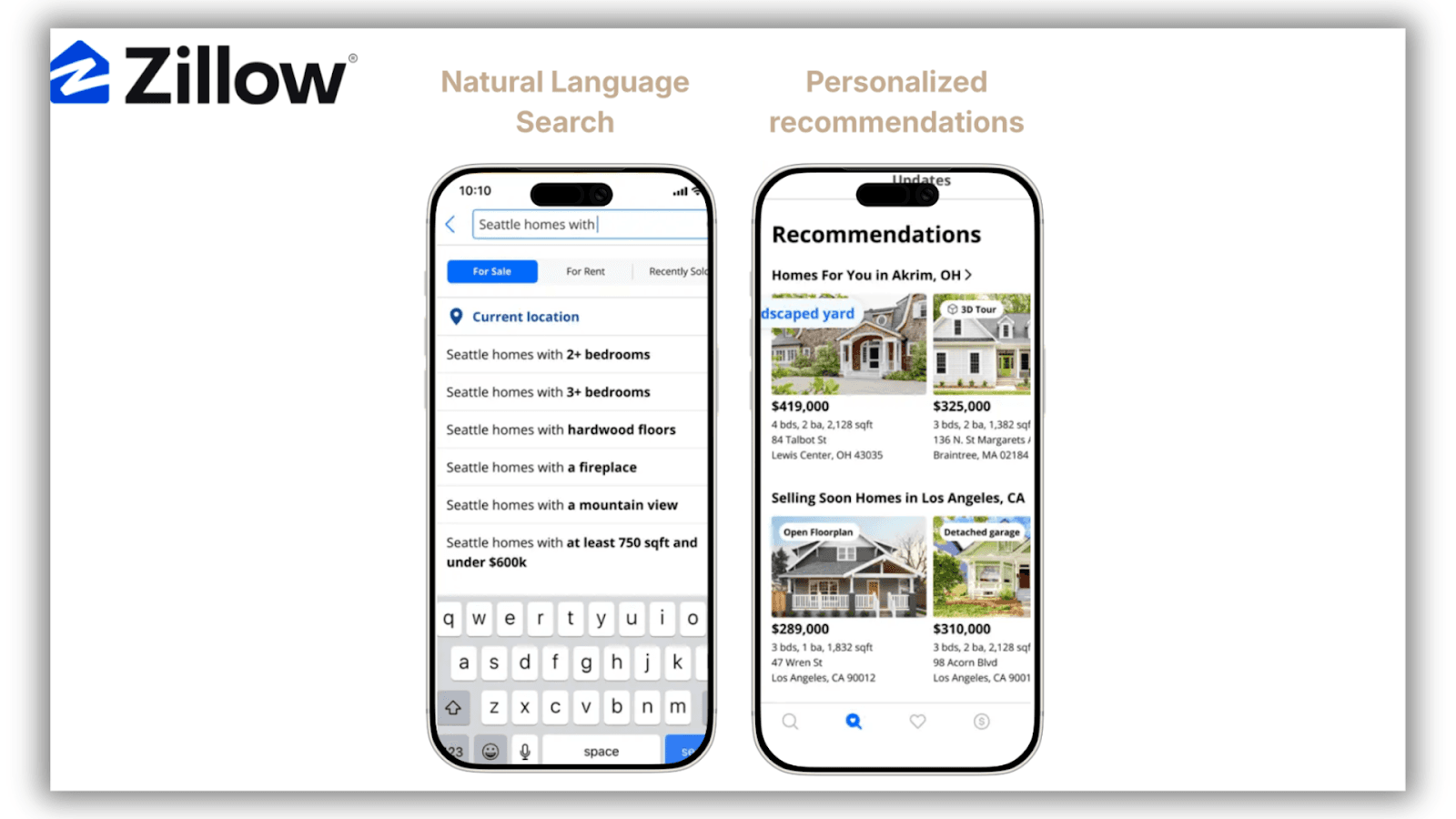
Other portals moving in this direction:
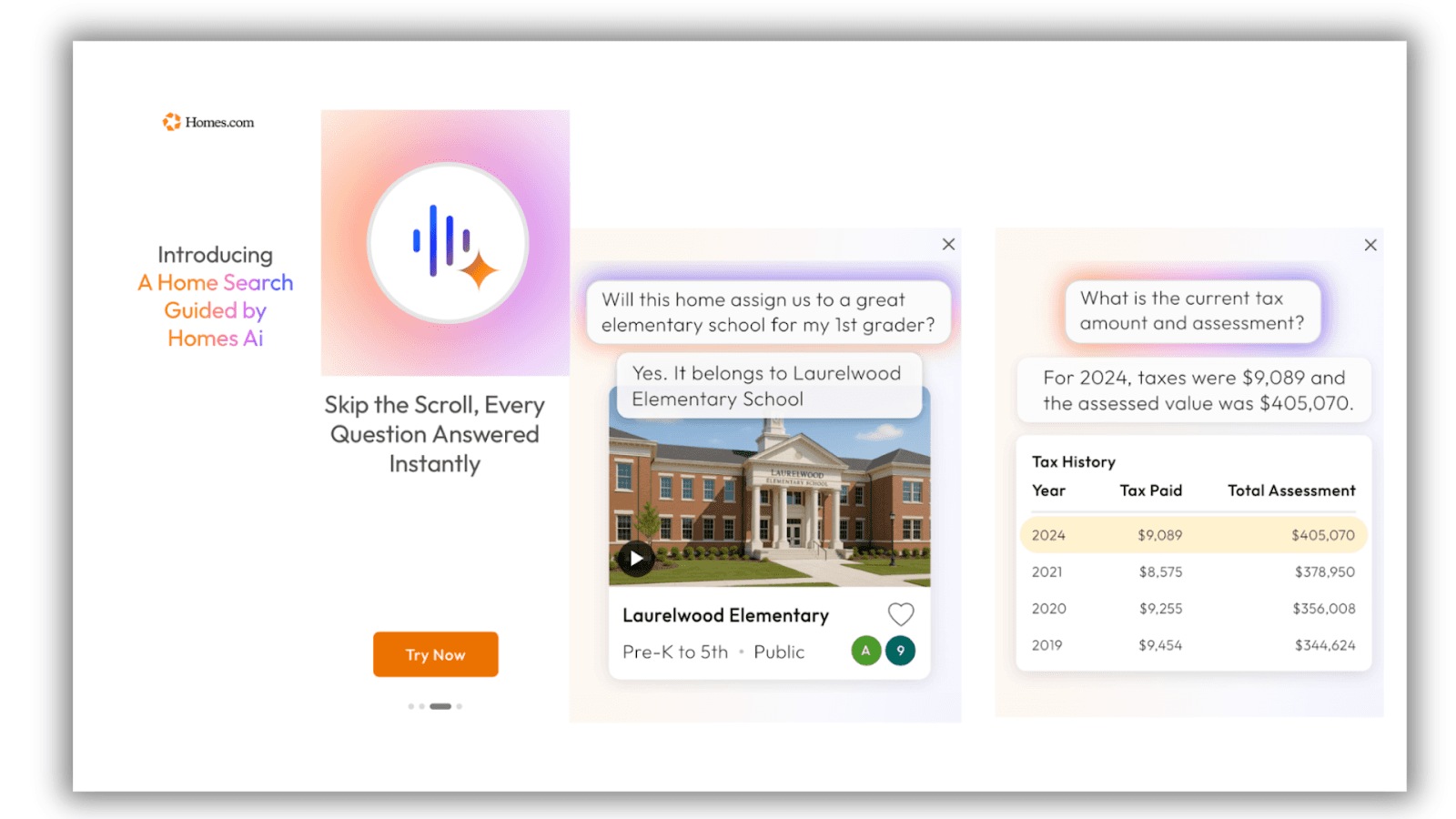
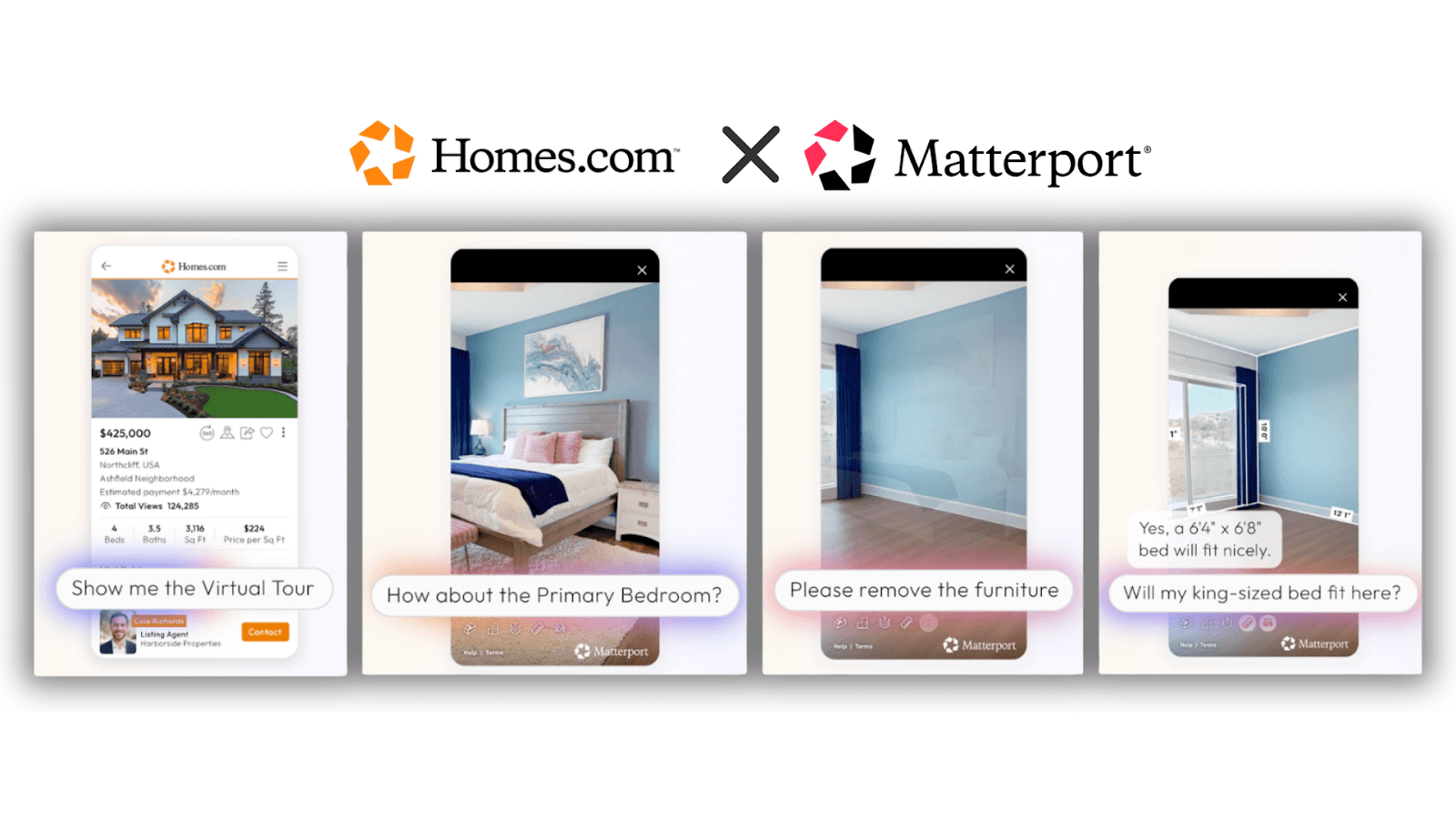
Homes.com (CoStar Group, United States) launched “Homes AI”, a real-time voice or text two-way conversational search experience powered by Microsoft speech recognition, CoStar's proprietary data, and CoStar’s Matterport's 3D property content.
ImmoScout24 (Germany) launched "HeyImmo AI," in 2025, accepting free-text descriptions like "a modern and well-maintained single-family home in a quiet, family-friendly neighbourhood with at least 4 rooms and 120m² of living space" and extracts filter criteria automatically.
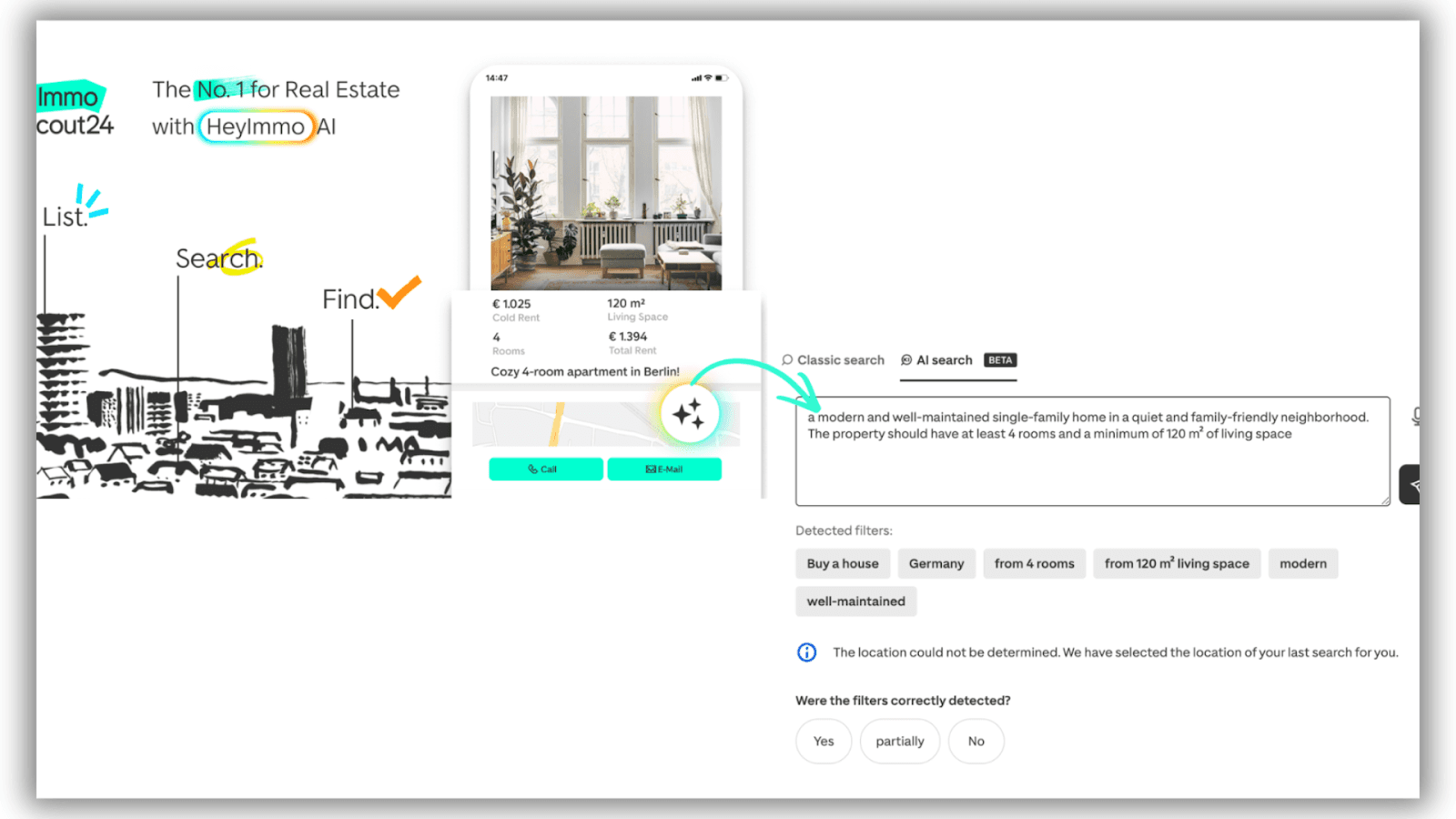
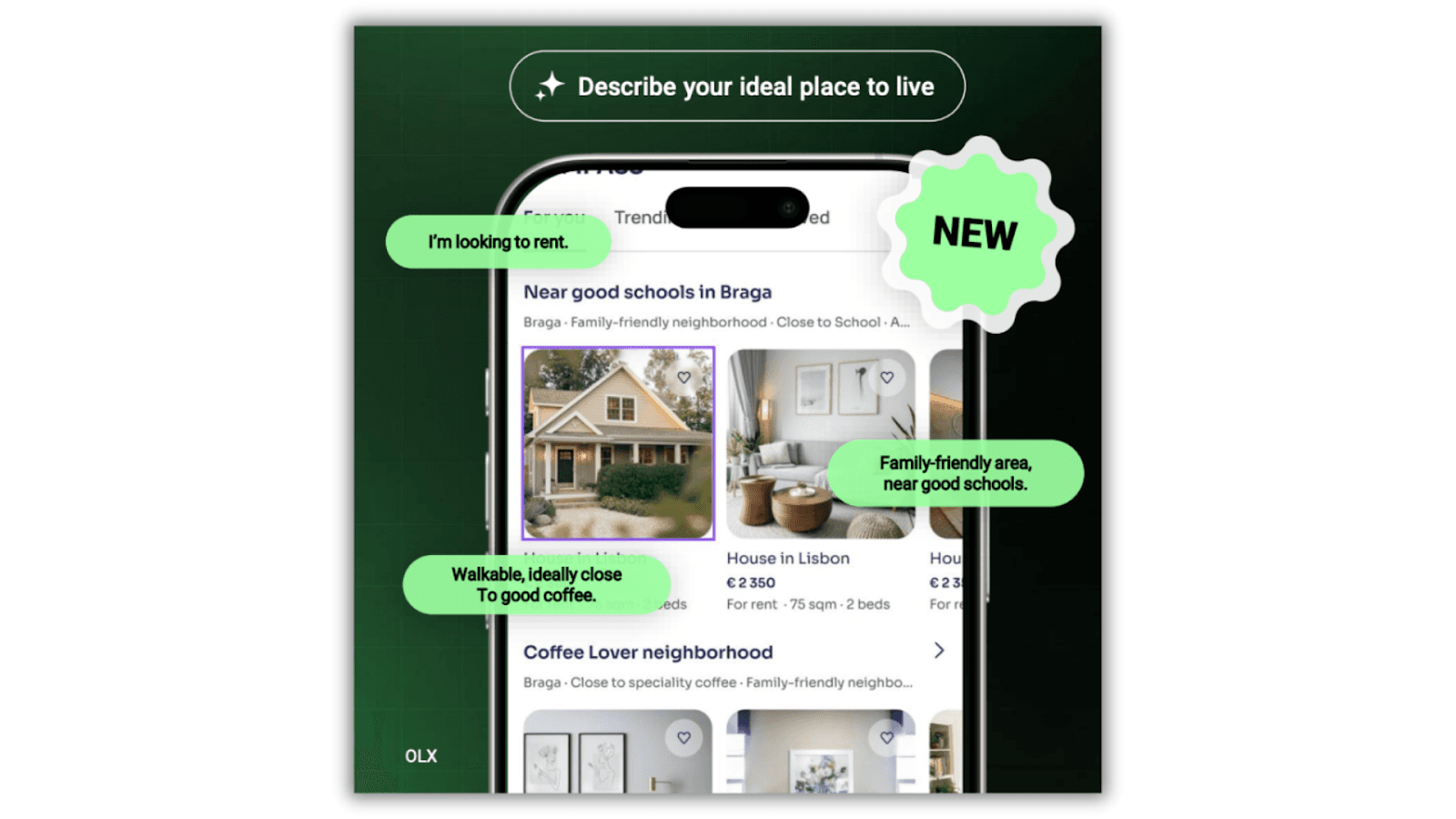
OLX (Portugal and CEE) introduced a "Describe your ideal place to live" interface that maps lifestyle language, "walkable, near good coffee," "family-friendly area near good schools", to neighbourhood clusters.
Realtor.com (US) has built natural language search capable of interpreting over 300 unique terms and cross-referencing both listing text and listing photos to surface matching results.
99.co (Indonesia/Singapore) takes a complementary approach; rather than conversational prompts, they use NLP to auto-tag listings with lifestyle keywords ("near MRT," "bright unit," "move-in ready") so natural language queries find relevant results even when listings weren't written to match them.
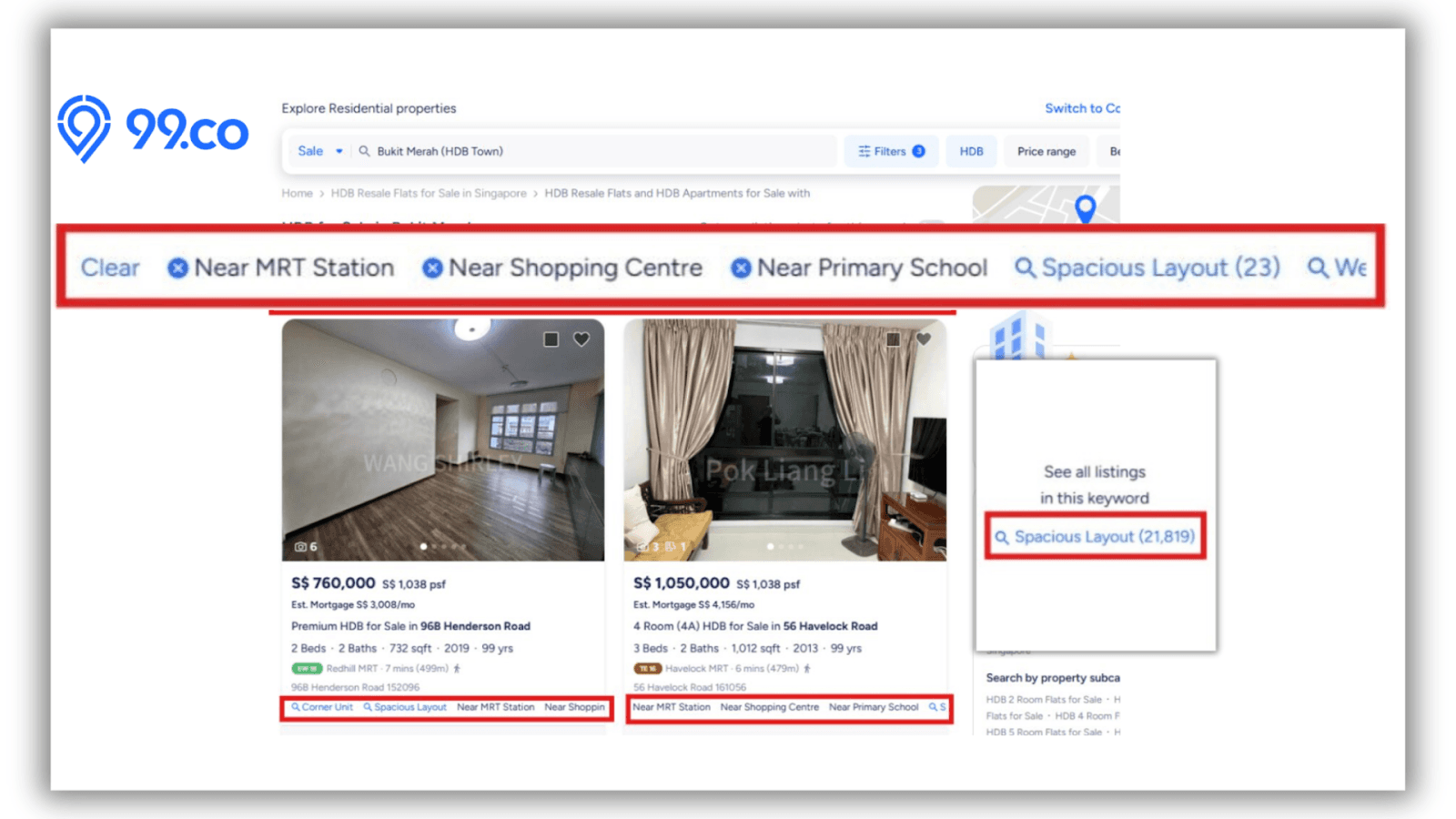
The "filters are dead" thesis is not fully true; structured filtering will coexist with NLS for the foreseeable future.
However, NLS dramatically lowers the entry barrier for new, younger and less frequent visitors, who do not know how to express their preferences in the constrained vocabulary of a filter panel. For portals, NLS also serves as a data collection layer: every query reveals a richer picture of buyer intent than any checkbox interaction ever could.
While the LLMs have the edge in underlying NLP given their vast, generalist data models, portals with millions of archived listings and potentially billions of saved queries are well placed to provide well performing property specific natural language conversations around discovering suitable homes amongst the portal’s tens or hundreds of thousands of listings.
Conversational Insights: 24/7 AI That Nurtures Buyers at Any Hour
Homes.com's AI assistant, built on a combination of Microsoft speech recognition, CoStar's data infrastructure, and Matterport's 3D property content, currently represents the most comprehensive conversational insights product deployed by any property portal globally. The assistant can answer questions that have historically required either an agent or hours of independent research: "Will this home assign my first-grader to a great elementary school?" receives a real answer, the school's name, grade range, and a photo, not a redirect to a third-party data source. "What is the current tax amount and assessment on this property?" returns a full tax history table. Questions about preapproval versus prequalification, closing costs, or the typical timeline from accepted offer to settlement are answered immediately, in natural language, by voice or by text.
Others doing it:
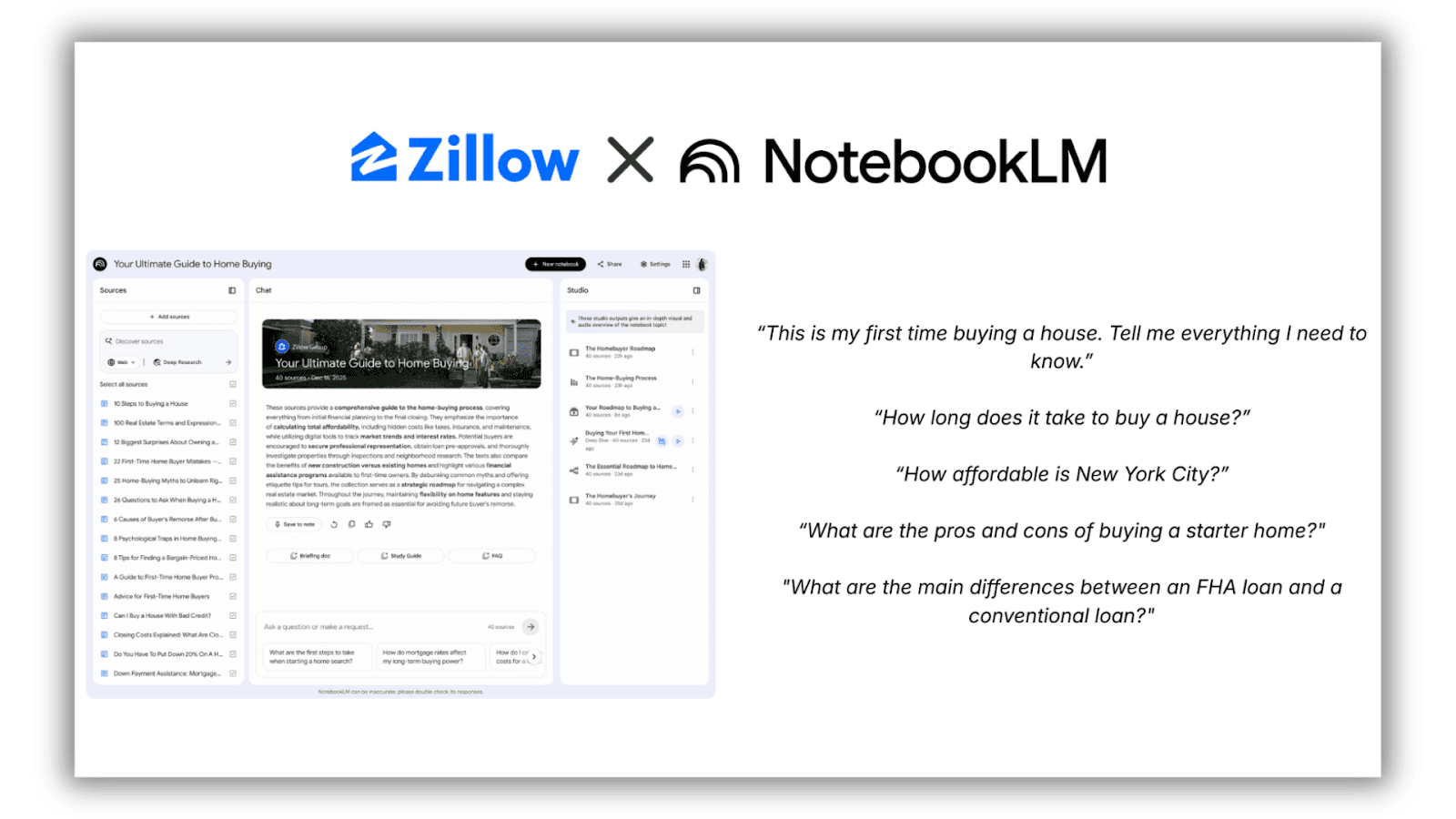
Zillow partnered with Google's NotebookLM to build an AI-powered buyer education tool that answers questions ranging from "what's the difference between preapproval and prequalification?" to "how affordable is New York City?"; even generating conversational audio overviews of their buying guides so buyers can listen to AI hosts discuss home-buying topics.
OhMyHome (Singapore) built "HomerGPT", an AI chatbot embedded directly in their platform that can answer complex questions about specific listings and the broader buying process. Buyers can ask about affordability, financing options, or what the buying process looks like step by step.
LankaPropertyWeb launched a tri-lingual AI chatbot, “Albot”, supporting Sinhala, Tamil, and English, reflecting how conversational AI is being adapted to multilingual markets across Asia.
Predictive Recommendations
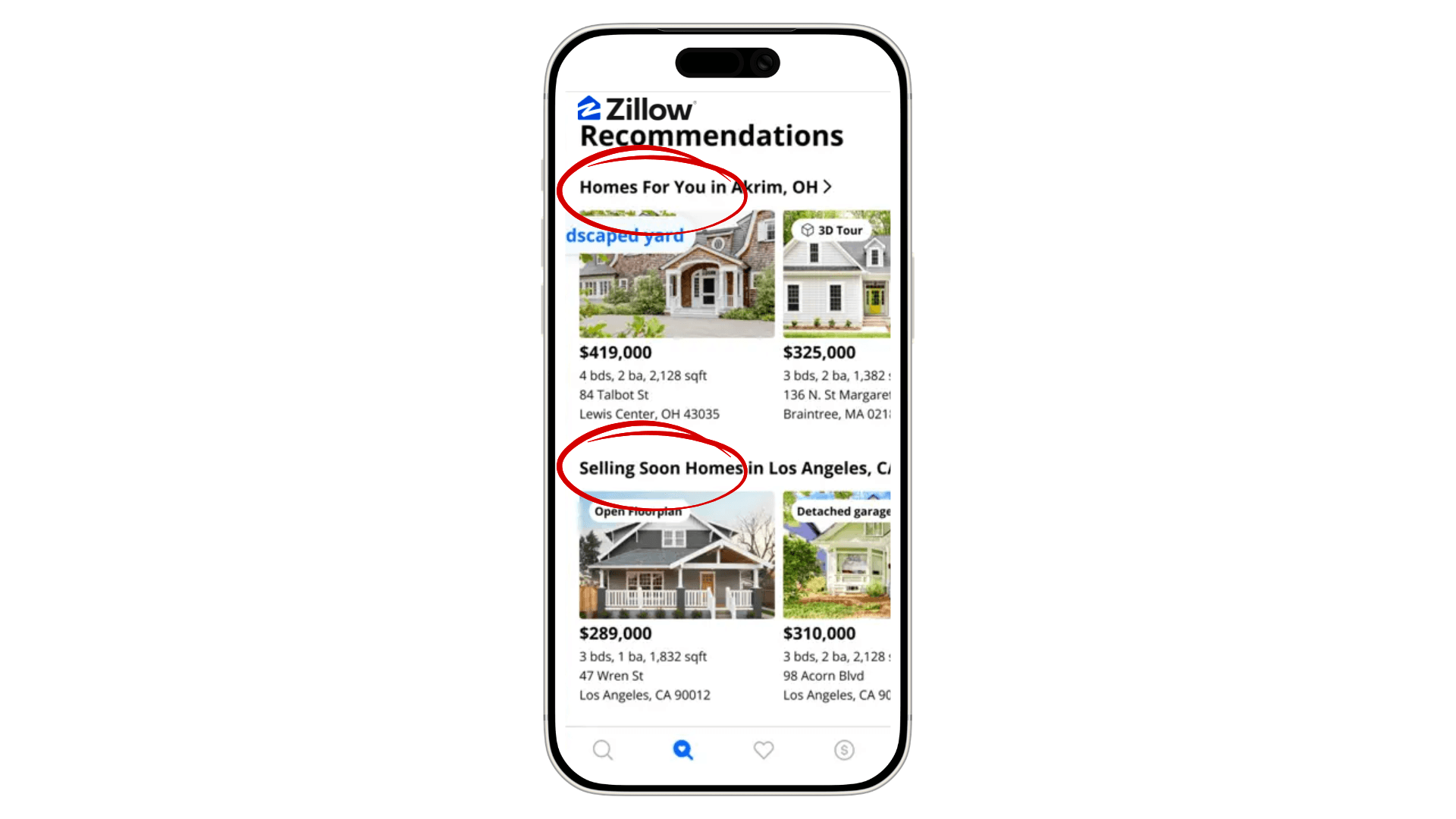
Zillow's personalized recommendations engine is one of the most mature ML-driven discovery systems in the property portal sector. The "Homes For You" feed curates a ranked list of properties based on a buyer's full behavioural history: saved homes, search patterns, price range interactions, and time spent on listing pages. The "Selling Soon" module surfaces properties that are statistically likely to come to market in the near future, based on signals such as historical listing patterns for similar homes in the area, time since last sale, and seasonal market dynamics, giving buyers a first-mover advantage before a property is formally listed.
Others doing it:
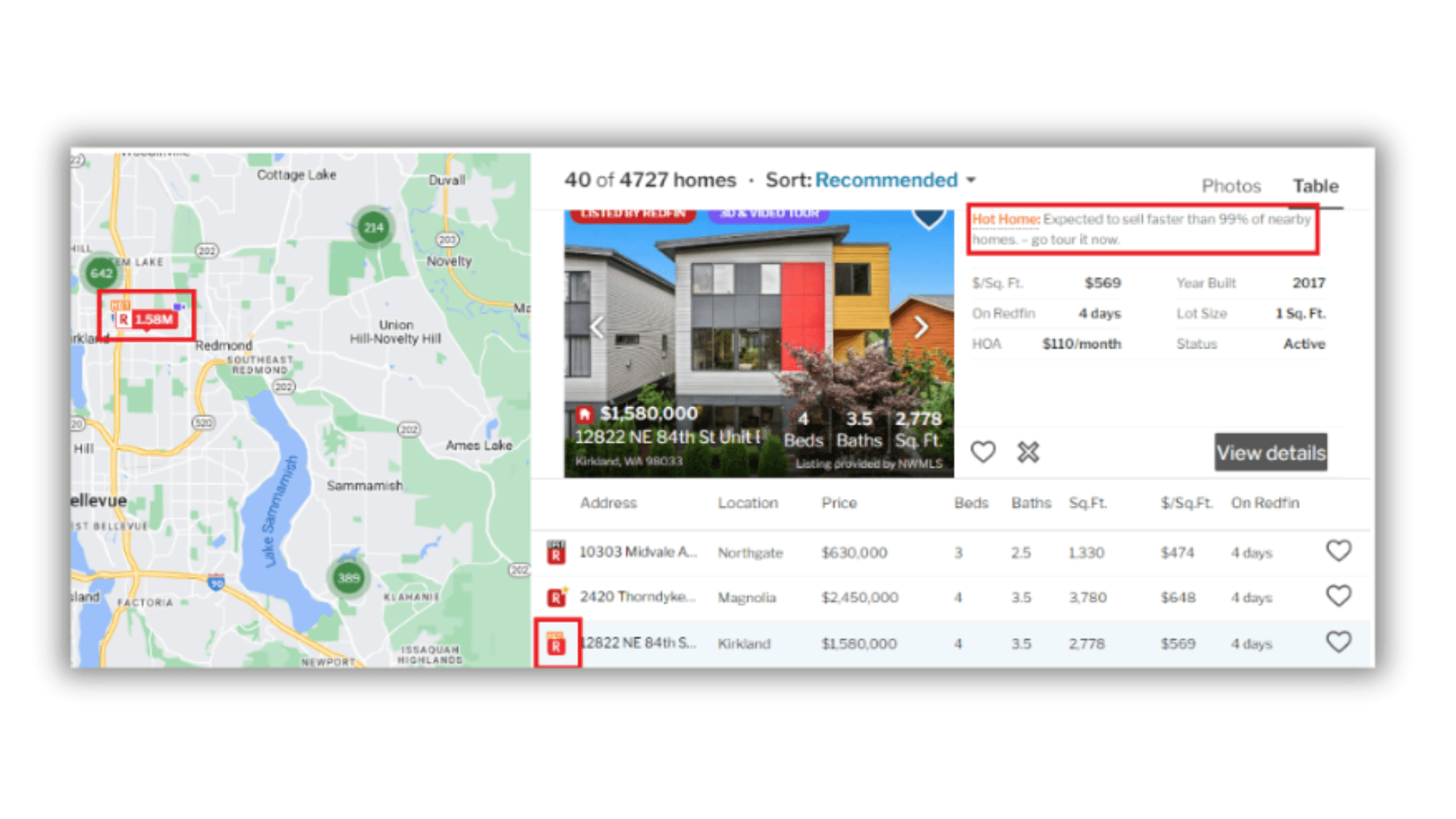
Redfin (US mega broker) built the “Hot Homes” score, a machine learning model that predicts which listings are likely to sell within 14 days of going live. Buyers browsing any listing immediately see a “Hot Home” badge and a predicted sale timeline. The model trains on hundreds of signals: how accurately priced the listing is relative to comparable sales, photo quality, floor plan completeness, days on market for comparable homes, and local demand patterns.
Hemnet (Sweden) has introduced AI-ranked saved search results that reorder listings based on a user’s revealed preferences from prior sessions, so the most statistically relevant properties in a saved search appear at the top rather than in chronological order.
Magicbricks (India) has introduced swipe-style property match cards, users can quickly show interest or skip, making discovery faster and more intuitive. As buyers interact, the system learns from their clicks, dwell time, and skips, and adjusts the next set of recommendations in real time.

Rumah123 (Indonesia) built a behavioral personalization engine that tracks user search sessions, what's being clicked, saved, and ignored, and learns preference patterns over time to surface properties the user hasn't explicitly searched for but is likely to want.
Automated Valuation Models (AVMs): Real-Time Pricing Intelligence for Buyers
Buyers want to know if the asking price is fair; AI-powered valuation tools provide an in-platform, property-specific, real-time answer.
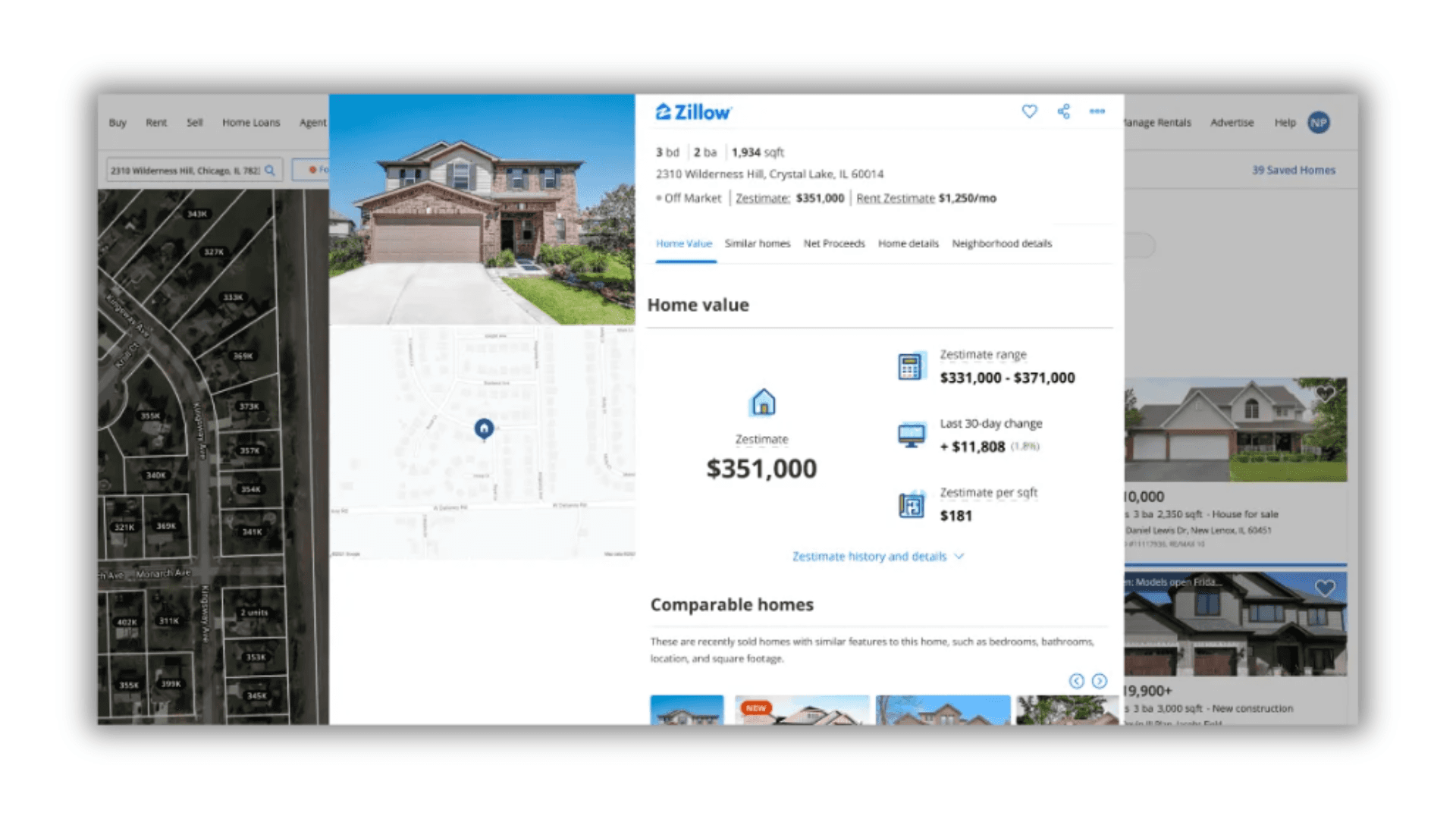
Zillow's neural Zestimate remains the oldest and most well-known AVM globally, with AI models that incorporate hundreds of data points including tax assessments, prior sales history, listing photos, and regional market trends.
Others doing it:
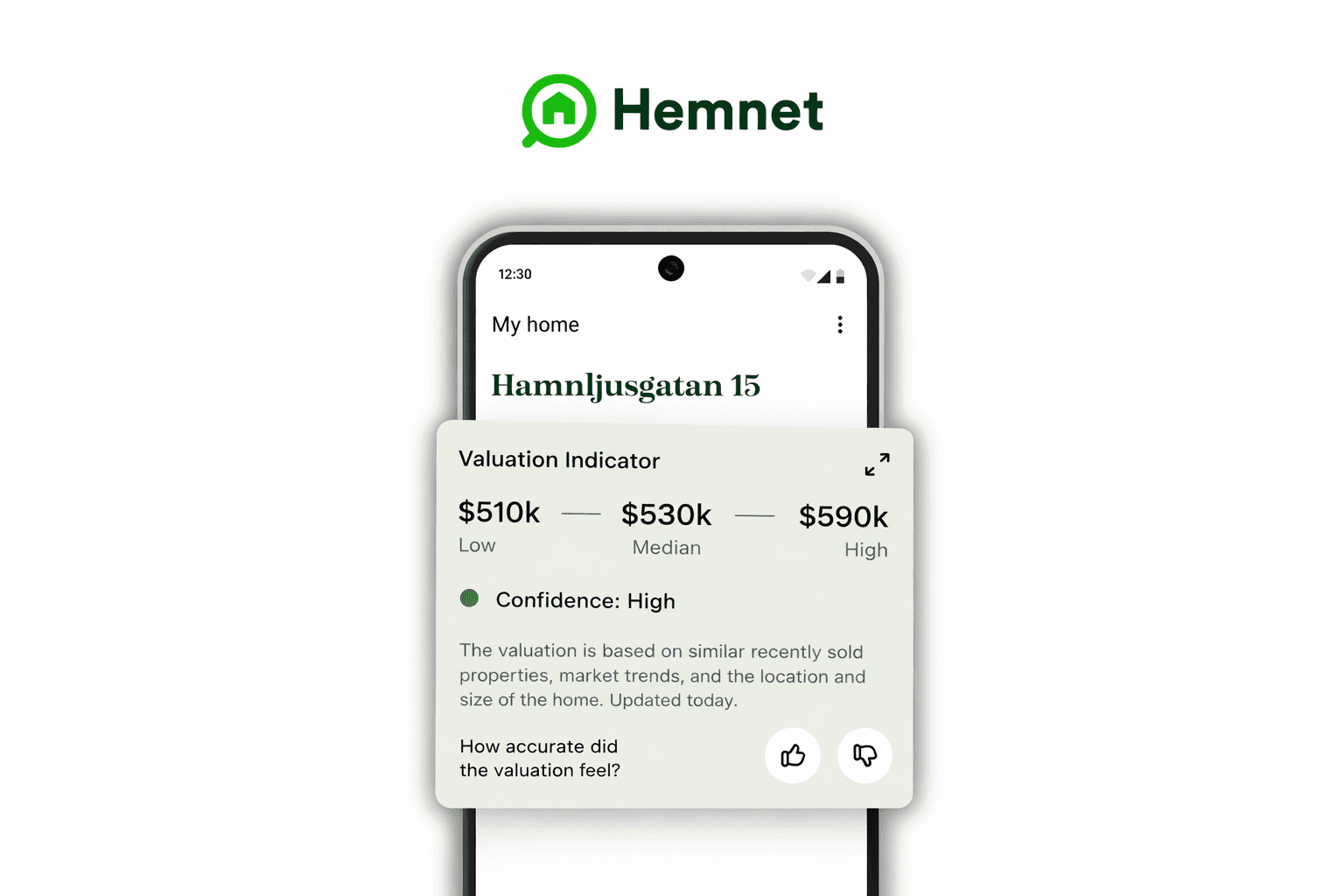
Hemnet (Sweden) has introduced pricing intelligence tools that benchmark a property against recent comparable sales in the same area, updated in near-real-time from public transaction records.
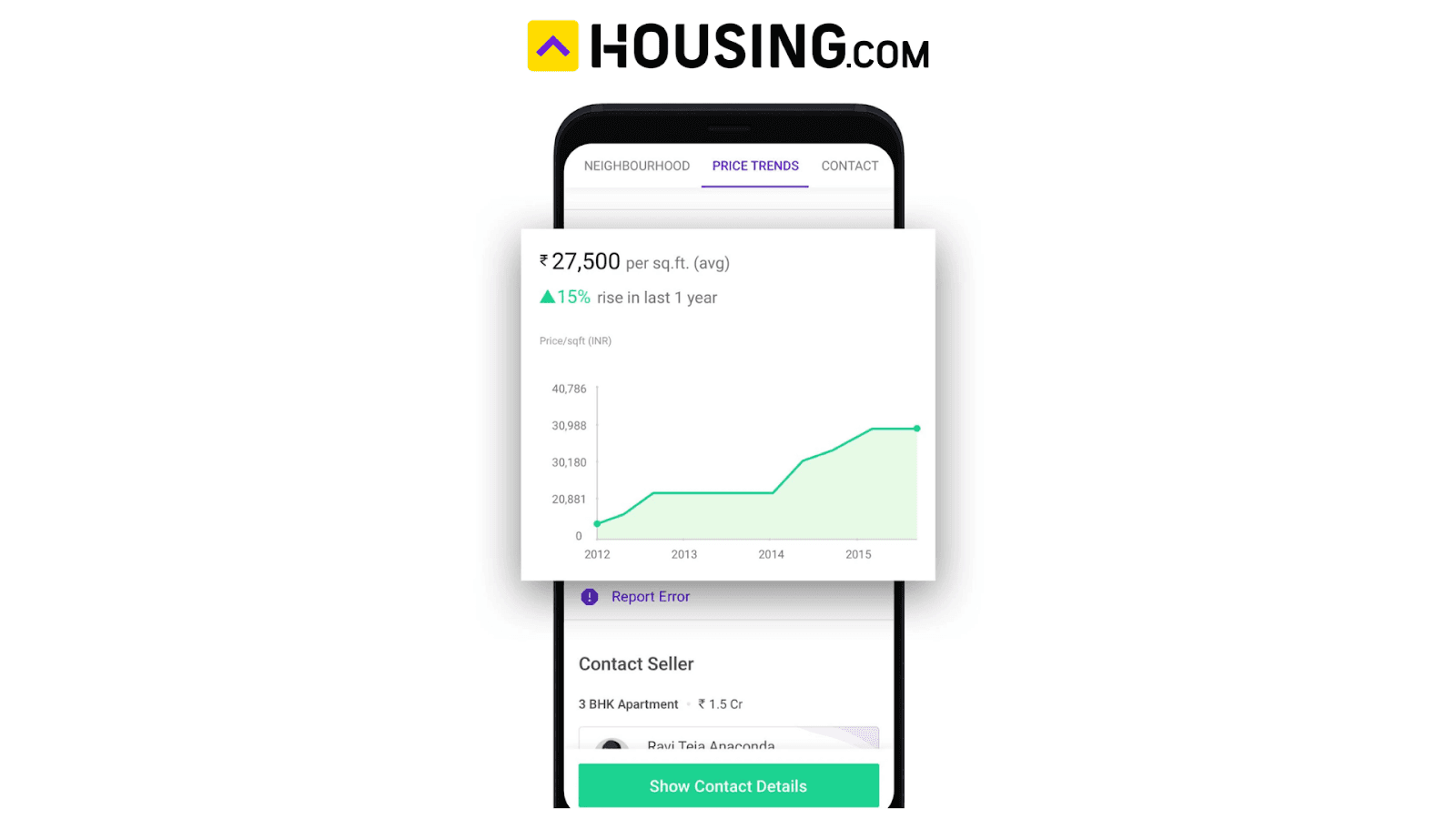
Housing.com (India)’s “Price Trend Engine”, launched in December 2023, is a machine learning-powered tool that generates historical price analysis at the neighbourhood and individual development level. For any given area, buyers can see the price-per-square-foot trend over multiple years, the percentage change over the last 12 months, and a breakdown by specific project or locality. The data is updated continuously using transaction records and listing data, giving buyers real-time visibility into whether a neighbourhood is appreciating, plateauing, or softening.
It is hard to find any major real estate portal now that does not have an AVM - a stark change from 3 years ago.
Hyper-Local Market Analytics: Neighbourhood Intelligence
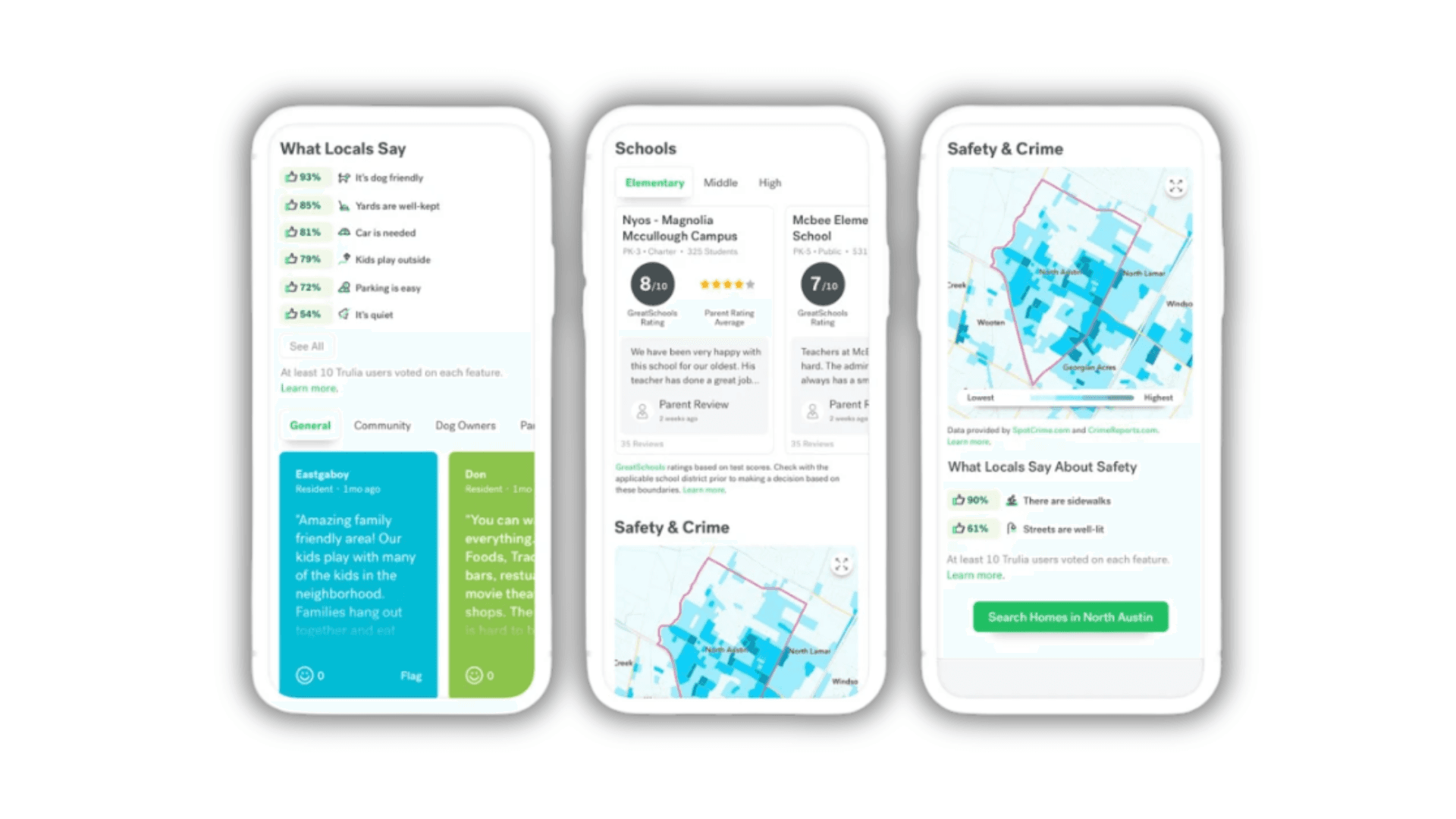
Trulia (part of Zillow Group) is embedding hyper-local context directly into listings, integrating crime maps, school ratings, commute times, and resident sentiment (“What Locals Say”) into the discovery flow. Trulia makes safety, lifestyle fit, and community feel part of the core search experience. In an AI-driven future, this structured neighbourhood data becomes critical infrastructure for answering conversational queries like “Is this area good for young families?” or “Will I feel safe walking here at night?”
Others doing it:
CoStar's Homes.com allows buyers to ask contextual neighbourhood questions ("will my child be assigned to a good elementary school from this address?") and receive direct answers in conversation.
OLX has launched a natural language lifestyle search that groups listings by neighbourhood character: "near good schools in Braga," "Coffee Lover neighborhood", so buyers can describe the life they want and find the location that fits.
Virtual Tours & AI Staging: Exploring Homes Before Visiting
Remote property exploration has moved well beyond static photos. AI is enabling buyers to navigate, interrogate, and mentally inhabit a space before ever setting foot in it.
Homes.com has integrated Matterport's 3D tour technology with a conversational AI layer that fundamentally changes what a virtual property visit can be. A buyer can ask "how about the primary bedroom?" to navigate to that room, then "please remove the furniture" to see the empty space, then "will my king-sized bed fit here?" and get a measurement overlay confirming yes, a 6'4" x 6'8" bed fits comfortably.
Others doing it:
In October 2024, Zillow acquired Virtual Staging AI (VSAI), a startup that uses computer vision to digitally furnish and style empty or poorly presented rooms in listing photos. Buyers browsing a Showcase listing can click the Virtual Staging icon and instantly see any room reimagined in a curated design style: Modern, Scandinavian, Industrial, Midcentury, Luxury, Coastal, or Farmhouse, with realistic AI-generated furniture and decor. The interface allows real-time swipe comparison between the original photo and the staged version. Sellers can present multiple style options simultaneously, catering to the aesthetic preferences of different buyer segments.
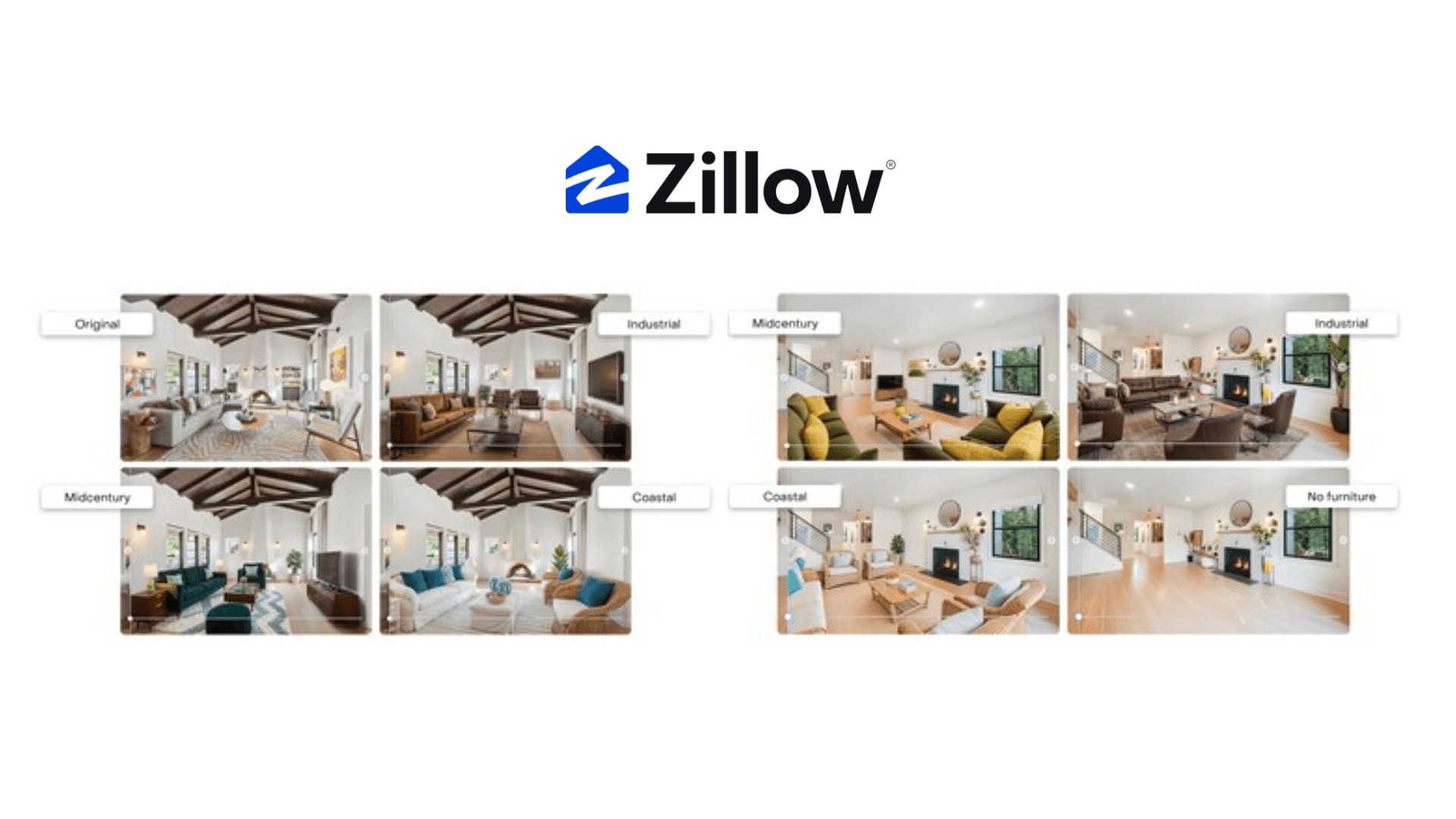
Rightmove launched “Style with AI” helping buyers visualise a property’s potential. Users can remove furniture from images, adjust lighting, and change the style of a home. It aims to give buyers confidence to contact an agent for a viewing, even if the property isn’t currently decorated to their taste.
Realtor.com and Redfin have each announced an integration with CubiCasa, a leading provider of interactive real estate floor plans, to automatically embed high-quality, interactive floor plans and virtual tours into their property listings.
Seller-Side Enhancements: AI Tools for Listing, Valuation, and Agent Workflows
Automated Listing Generation
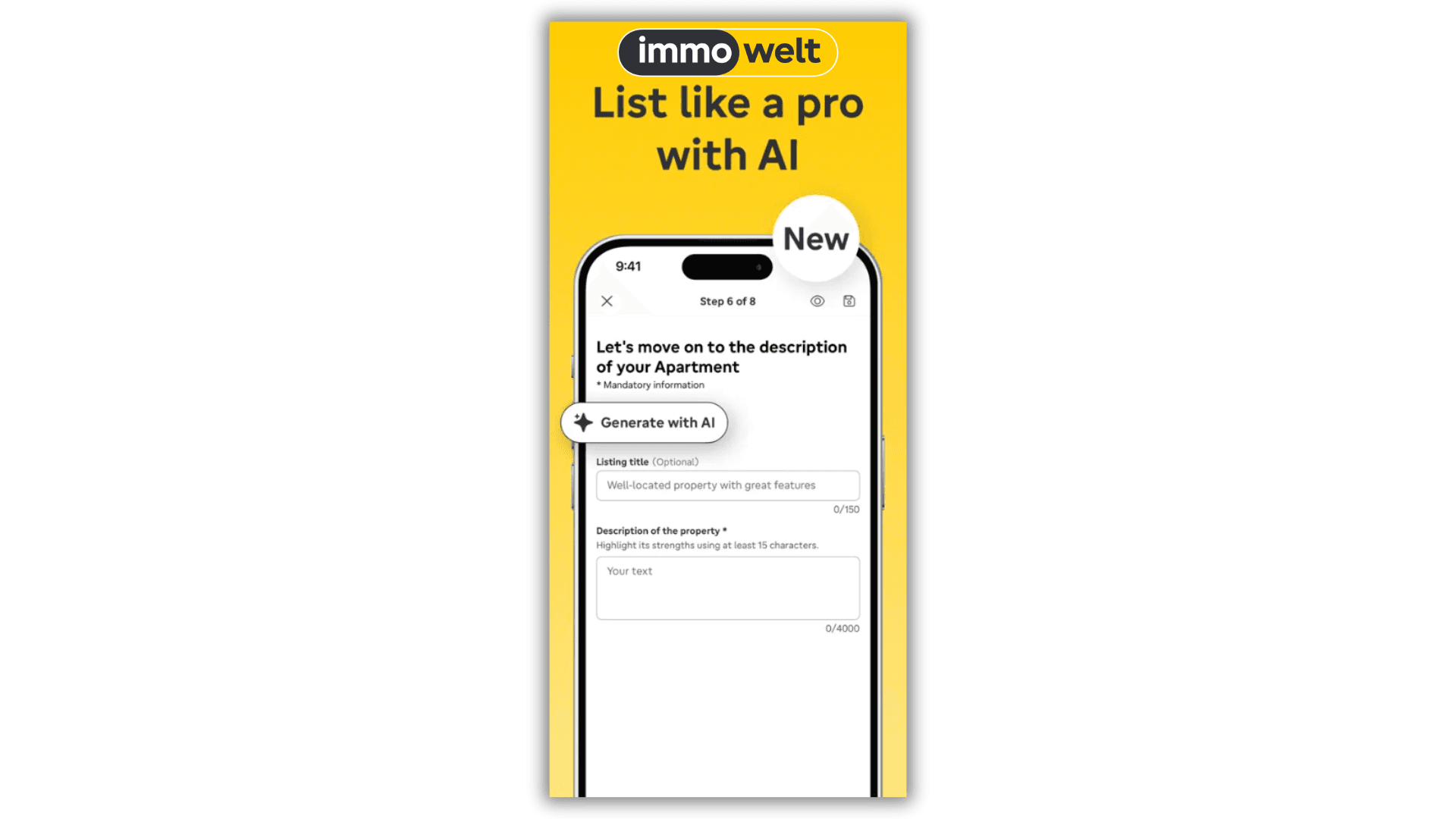
Immowelt (Germany) introduced an AI-powered "Exposé" generator that creates complete listing content: headline, description, and key selling points, from structured agent inputs. The tool targets the significant share of German listings that are described in dry, technical language rather than buyer-friendly marketing copy, with the goal of improving click-through rates and time-to-inquiry across the platform.
Others doing it:
SeLoger (France) has been investing in AI content tooling for agents, including automated description drafts and listing quality scoring that flags incomplete or low-quality listings before they go live.
PropertyGuru (Singapore) launched an AI Video tool that takes a listing's existing photos and written description and automatically generates a narrated video walkthrough, a cinematic marketing asset created in seconds from content the agent has already provided. The tool converts the static listing into a piece of shareable video content suitable for social media distribution, driving off-platform reach without any additional agent effort.
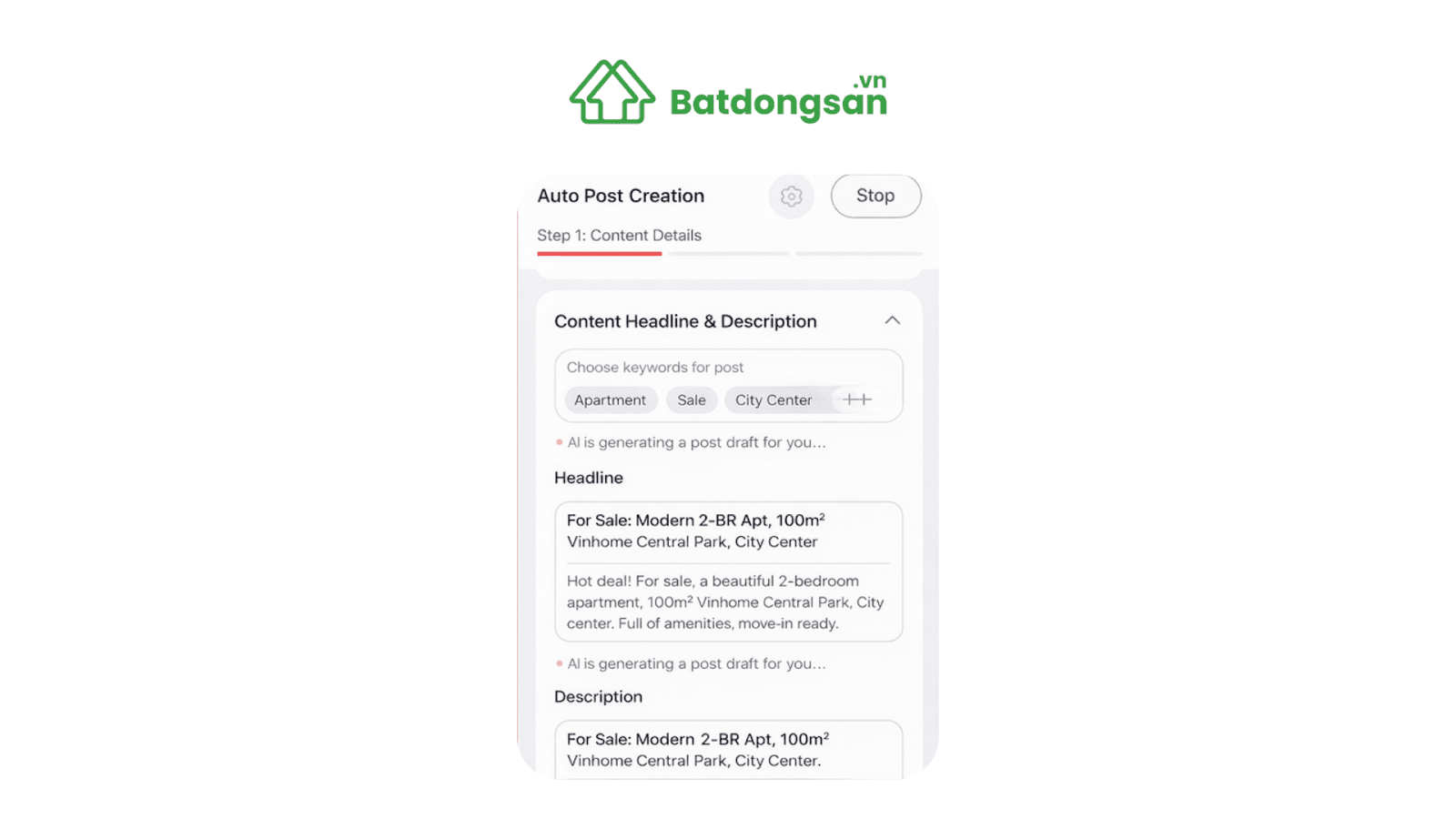
Batdongsan (Vietnam) built an Auto Post Creation tool that takes a property's key attributes: type, size, location, features, and generates a complete listing description automatically. Agents input the data; AI writes the marketing copy. The result is faster listings, more consistent quality, and less friction for agents who aren't natural writers.
Lead Scoring and Routing: Getting the Right Lead to the Right Agent Instantly
Realtor.com (US) operates ReadyConnect Concierge, a service in which an AI system initiates an SMS conversation with inbound leads to pre-qualify them, establishing their timeline, budget, and seriousness, before handing them off to a partner agent. The output is a meaningful improvement in lead quality for agents, who receive contacts that have already confirmed active intent rather than exploratory browsing.
Housing.com (India) uses AI to power a dynamic Listing Score and Ranking system that evaluates properties based on completeness of information, photo quality, pricing accuracy, and responsiveness, and then algorithmically ranks listings to surface the most credible and high-quality options higher in search results. By combining behavioural signals (clicks, saves, engagement) with structured listing data, Housing.com continuously optimizes search rankings to improve buyer experience while nudging sellers and agents to create richer, more trustworthy listings.

Fraud Detection and Listing Verification: AI as Trust Infrastructure
Across Asia, where property fraud is a significant consumer concern, AI-powered verification is emerging as a major point of differentiation for portals that want to be seen as the trusted option.
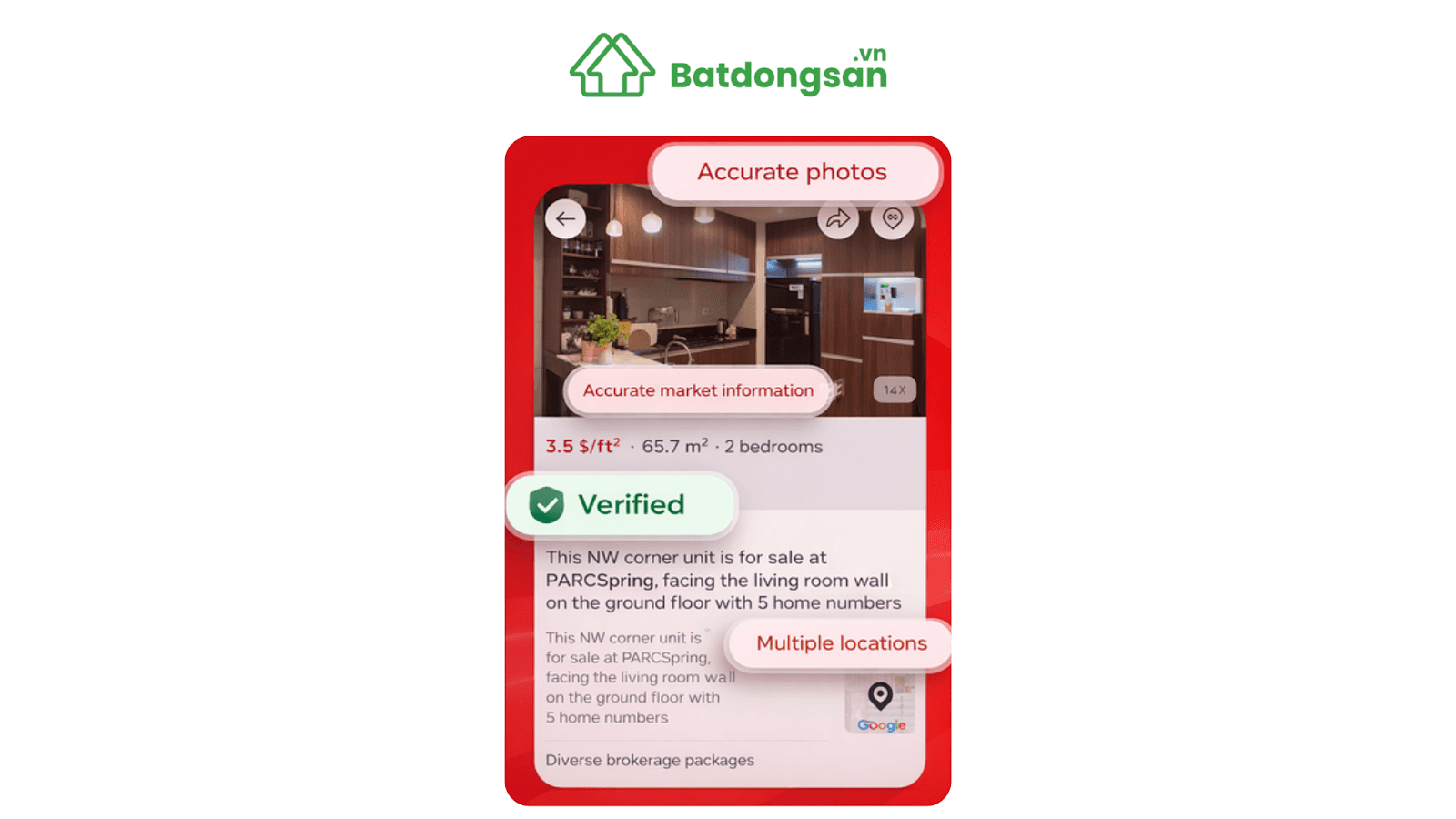
Batdongsan (Vietnam) uses AI to check if a property’s address is real, confirm ownership and legal papers, detect duplicate or fake listings, and flag suspicious activity before a listing goes live, helping keep the platform clean and trustworthy.
Others doing it:
Leboncoin (France) has deployed AI fraud detection that combines image analysis, text pattern recognition, and user behaviour profiling to intercept fraudulent listings
Zillow has invested significantly in AI-powered fraud detection, particularly in its rental marketplace, where synthetic listings and identity fraud are recurring problems. The system uses computer vision to flag listing photos that have appeared under different addresses, NLP to detect listing text patterns associated with scams, and behavioural signals to identify accounts exhibiting fraudulent activity before listings are published.
Bayut, UAE's Largest Real Estate Portal, operates a TruCheck programme requiring the agent to take a geo-tagged photo from within the property he/she claims to be representing.
AI assisted seller journey
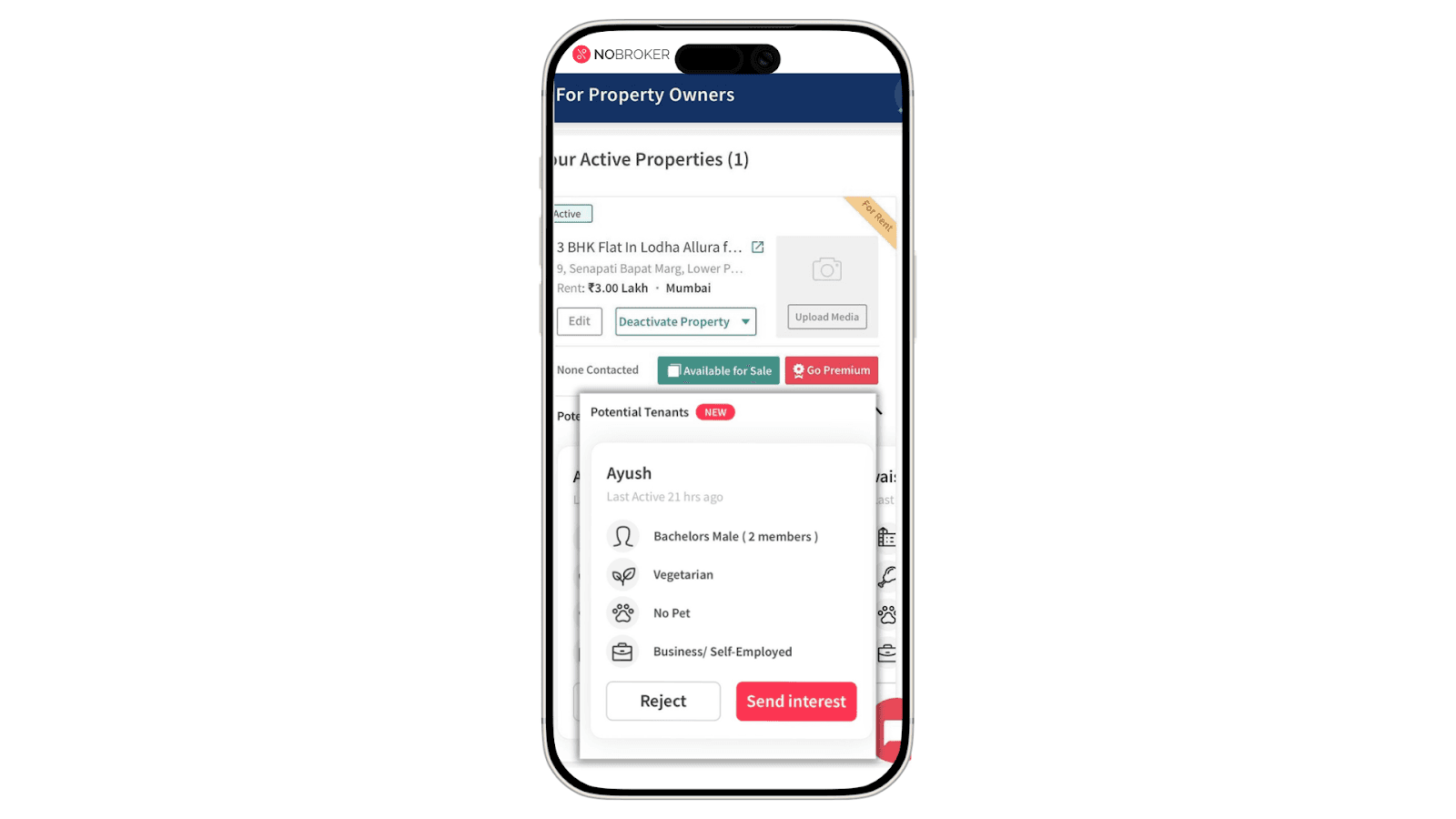
NoBroker (India) deploys a full end-to-end conversational AI agent called "Natasha" that guides property owners through listing creation and plan selection in real time, proactively prompting them at each stage. It’s also developed an AI-Powered Tenant Suggestion Engine proactively identifies prospective tenants whose budgets and preferences match a listed property, and surfaces them to the landlord, flipping the model from waiting for inbound inquiries to actively generating qualified matches.

Others doing it:
OhMyHome's Homer.ai finds potential buyers from their pool of active users before those buyers have even expressed intent in the specific listing, predictive matching before the inquiry exists.

PropertyGuru's AgentNet with Optimus gives agents an analytics and performance dashboard, so they can track which listings are gaining traction and where their pipeline stands.
AI-Powered AVMs for Sellers
Zoopla (UK) has one of the most comprehensive AVM datasets in the European market, covering virtually every residential property in the UK. The Zoopla estimate is surfaced on property detail pages with a confidence interval range, allowing sellers to understand both the central estimate and the band of uncertainty.

Others doing it:
ImmoScout24 (Germany) offers a "Marktpreis" instant valuation tool for homeowners, generating a market price estimate in seconds from postcode, size, and construction year inputs. The tool is integrated into the selling journey as a conversion point: a seller who gets a valuation is immediately presented with agent matching options and a path to listing.
OhMyHome (Singapore) built "E-Valuation by HomerAI," which calculates a property's current value, shows month-over-month movement, and benchmarks it against what neighbours are selling for.

PropertyGuru’s AVM, known as ProxyPrice, uses its proprietary algorithm to generate instant property value estimates based on recent transaction data, location, size, and market trends, giving homeowners a real-time indicative valuation of their property.

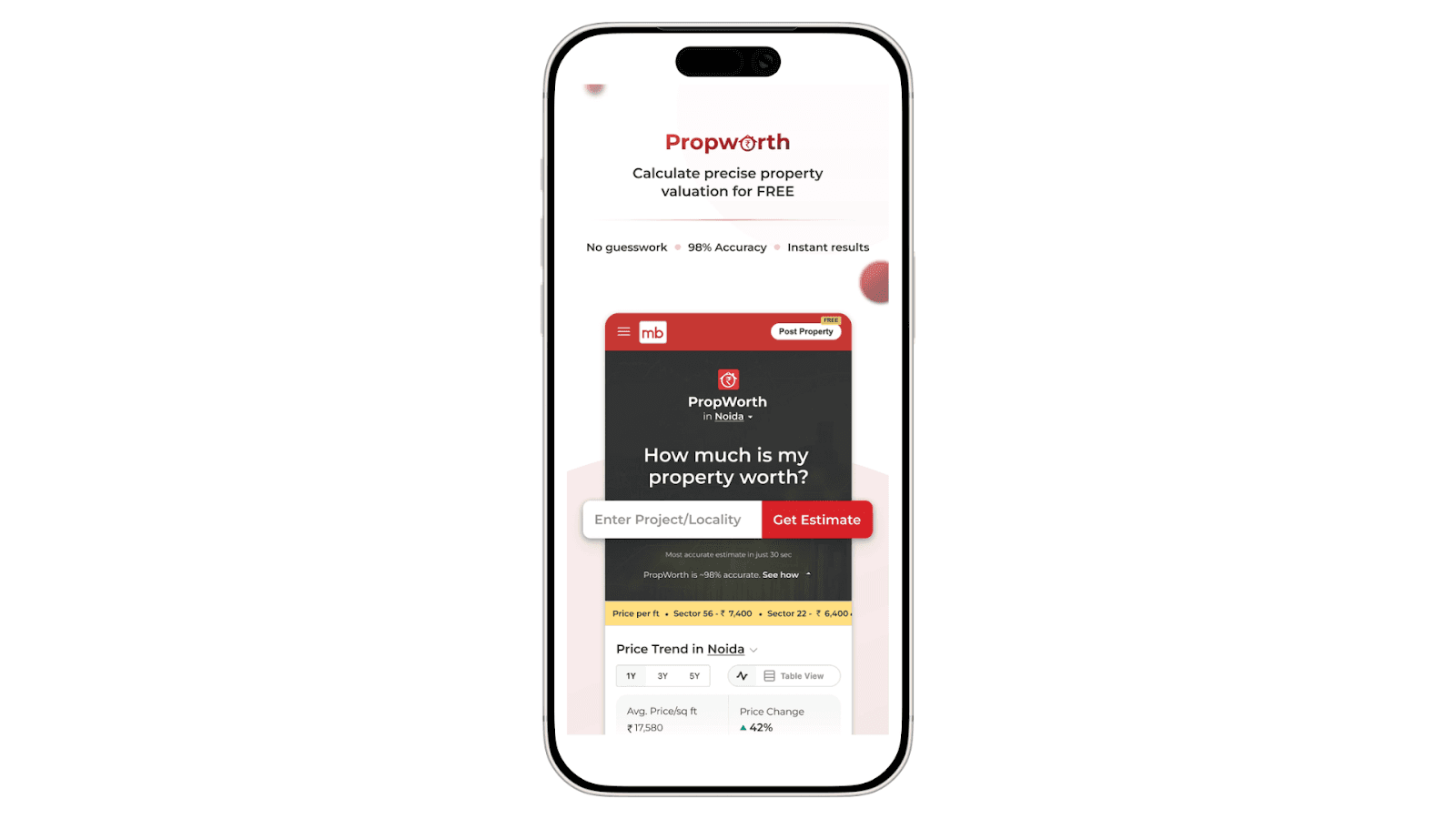
Magicbricks (India) launched "PropWorth", an automated valuation model claiming 98% accuracy that instantly estimates a property's market value, shows price per square foot by sector, and surfaces a five-year price trend for the area. A seller asking "how much is my property worth?" gets an answer in seconds, with supporting data visualized inline.
The Bigger Picture: Why All of This Is Happening Now
Three forces are powering the above trends:
Service level enhancement: Portal business models have historically been built on subscription fees for listing-based lead gen for agents. As the sources of leads for agents beyond the portal expand, AI enables portals to deliver more value to agents and users without recruiting an army of product people: automating content generation, providing support to buyers and agents, listings and buyer verification, lead management, tasks that previously would have required considerable amounts of human labor.
Disintermediation risk: The emergence of AI interfaces (ChatGPT, Google AI Mode, Gemini) as new search surfaces will create a meaningful amount of new property discovery starting outside portals. Portals are responding by embedding themselves inside those interfaces, not ignoring or fighting them.
Changes in consumer expectations: Buyers and renters now expect the personalization, speed, and intelligence they experience on Netflix, Spotify, and Amazon. A portal that returns a paginated list of properties filtered by bedrooms and price feels ancient by comparison. Judicious applications of AI is allowing portals to more closely match consumer expectations that have been set outside the real estate category.